
Building a speech recognition system with privacy identification information based on Google Voice for social robots
The Journal of Supercomputing, 2022年4月12日
DOI: 10.1007/s11227-022-04487-3
3行要約
- Google Voiceを使う対話ロボット向けの音声認識を扱う。
- 音声入力に含まれる、個人の識別につながる情報に着目する。
- 試作機を静かな環境、雑音のある環境、音楽が流れる環境で試し、認識精度と個人情報の保護を評価した。
論文の図
アブストラクト(原文)
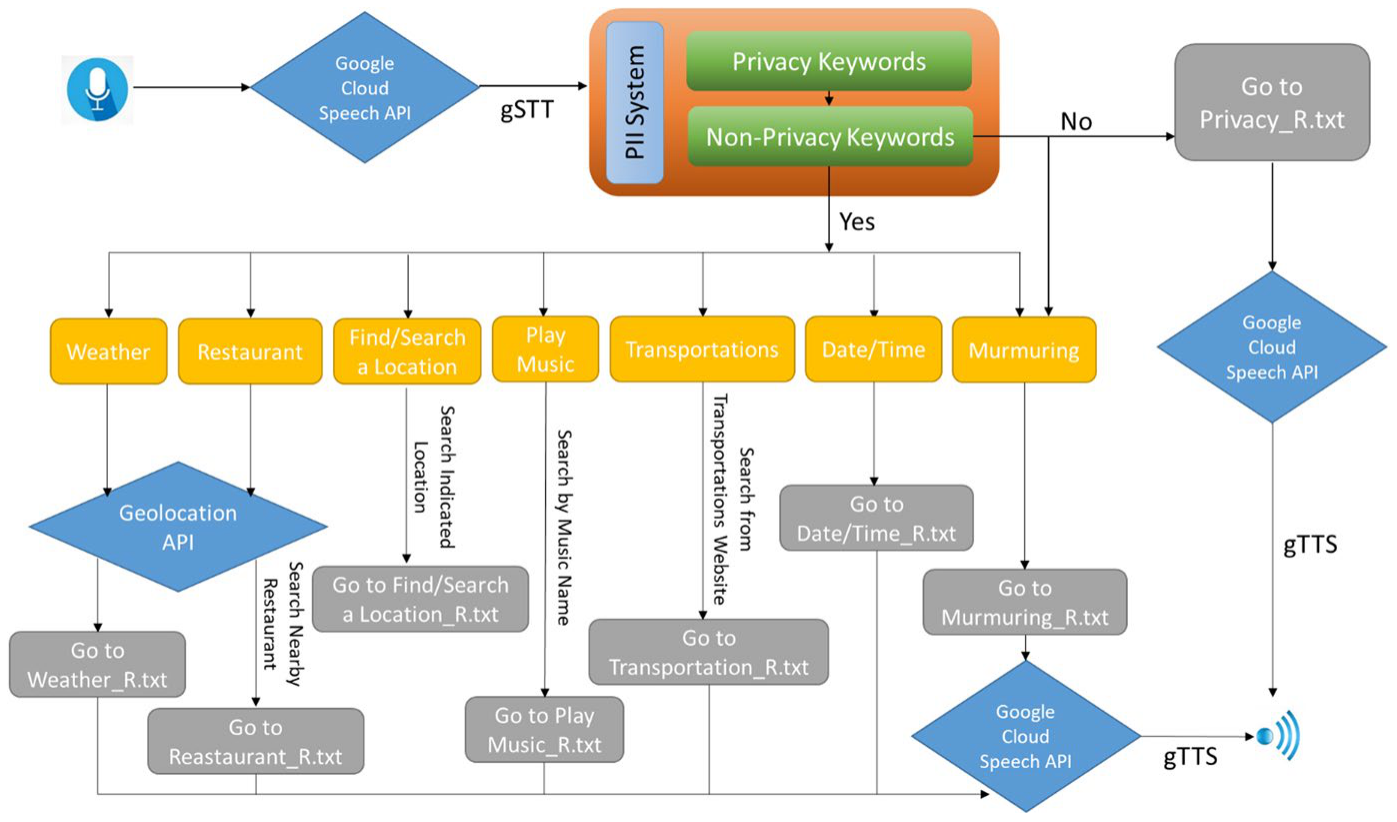
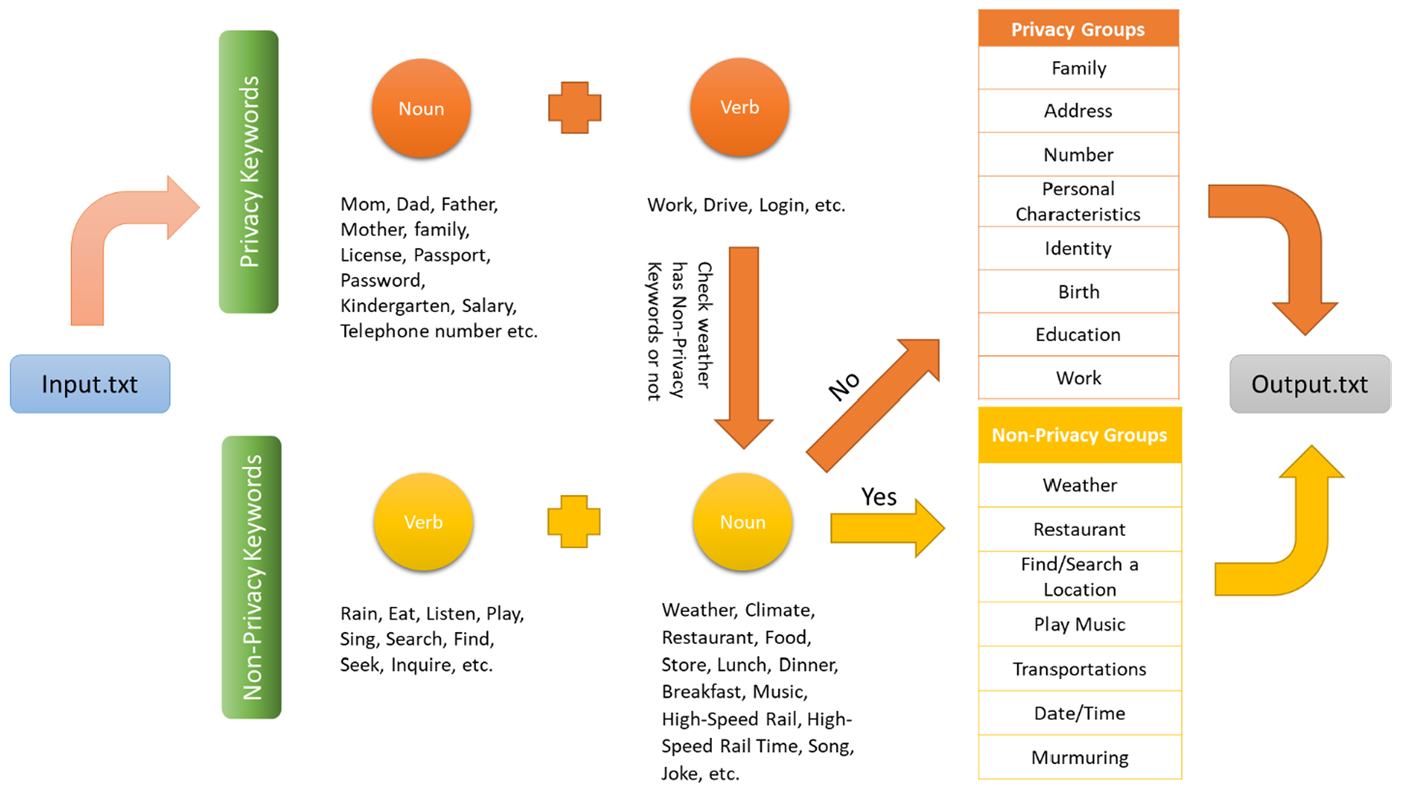
Currently, many smart speakers, even social robots, appear on the market to help people's lives become more convenient. Usually, people use smart speakers to check their daily schedule or control home appliances in their house. Many social robots also include smart speakers. They have the common property of being used in voice control machines. Regardless of where the smart speaker is installed and used, when people start a conversation with voice equipment, a security or privacy risk is exposed. Hence, we want to build a speech recognition (SR) that contains the privacy identification information (PII) system in this paper. We call this the SR-PII system. We used a Google Artificial-Intelligence-Yourself (AIY) Voice Kit released from Google to build a simple, smart dialog speaker and included our SR-PII system. In our experiments, we test SR accuracy and the reliability of privacy settings in three environments (quiet, noise, and playing music). We also examine the cloud response and speaker response times during our experiments. The results show that the speaker response is approximately 3.74 s in the cloud environment and approximately 9.04 s from the speaker. We also showed the response accuracy of the speaker, which successfully prevented personal information with the SR-PII system in three environments. The speaker has a response mean time of approximately 8.86 s with 93% mean accuracy in a quiet room, approximately 9.18 s with 89% mean accuracy in a noisy environment, and approximately 9.62 s with 90% mean accuracy in an environment that plays music. We conclude that the SR-PII system can secure private information and that the most important factor affecting the response speed of the speaker is the network connection status. We hope that people can, through our experiments, have some guidelines in building social robots and installing the SR-PII system to protect users’ personal identification information.
引用方法
P.-C. Lin, B. Yankson, V. Chauhan, and M. Tsukada, “Building a speech recognition system with privacy identification information based on Google Voice for social robots,” The Journal of Supercomputing, 2022, doi: 10.1007/s11227-022-04487-3.
BibTeX
@article{Lin2022d,
  title         = {Building a speech recognition system with privacy identification information based on Google Voice for social robots},
  author        = {Pei-Chun Lin and Benjamin Yankson and Vishal Chauhan and Manabu Tsukada},
  doi           = {10.1007/s11227-022-04487-3},
  isbn          = {1573-0484},
  year          = {2022},
  date          = {2022-04-12},
  journal       = {The Journal of Supercomputing},
  abstract      = {Currently, many smart speakers, even social robots, appear on the market to help people's lives become more convenient. Usually, people use smart speakers to check their daily schedule or control home appliances in their house. Many social robots also include smart speakers. They have the common property of being used in voice control machines. Regardless of where the smart speaker is installed and used, when people start a conversation with voice equipment, a security or privacy risk is exposed. Hence, we want to build a speech recognition (SR) that contains the privacy identification information (PII) system in this paper. We call this the SR-PII system. We used a Google Artificial-Intelligence-Yourself (AIY) Voice Kit released from Google to build a simple, smart dialog speaker and included our SR-PII system. In our experiments, we test SR accuracy and the reliability of privacy settings in three environments (quiet, noise, and playing music). We also examine the cloud response and speaker response times during our experiments. The results show that the speaker response is approximately 3.74 s in the cloud environment and approximately 9.04 s from the speaker. We also showed the response accuracy of the speaker, which successfully prevented personal information with the SR-PII system in three environments. The speaker has a response mean time of approximately 8.86 s with 93{%} mean accuracy in a quiet room, approximately 9.18 s with 89{%} mean accuracy in a noisy environment, and approximately 9.62 s with 90{%} mean accuracy in an environment that plays music. We conclude that the SR-PII system can secure private information and that the most important factor affecting the response speed of the speaker is the network connection status. We hope that people can, through our experiments, have some guidelines in building social robots and installing the SR-PII system to protect users’ personal identification information.},
  keywords      = {},
  pubstate      = {published},
  tppubtype     = {article}
}