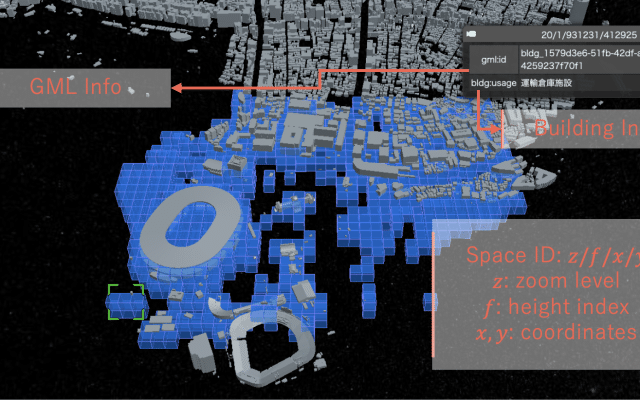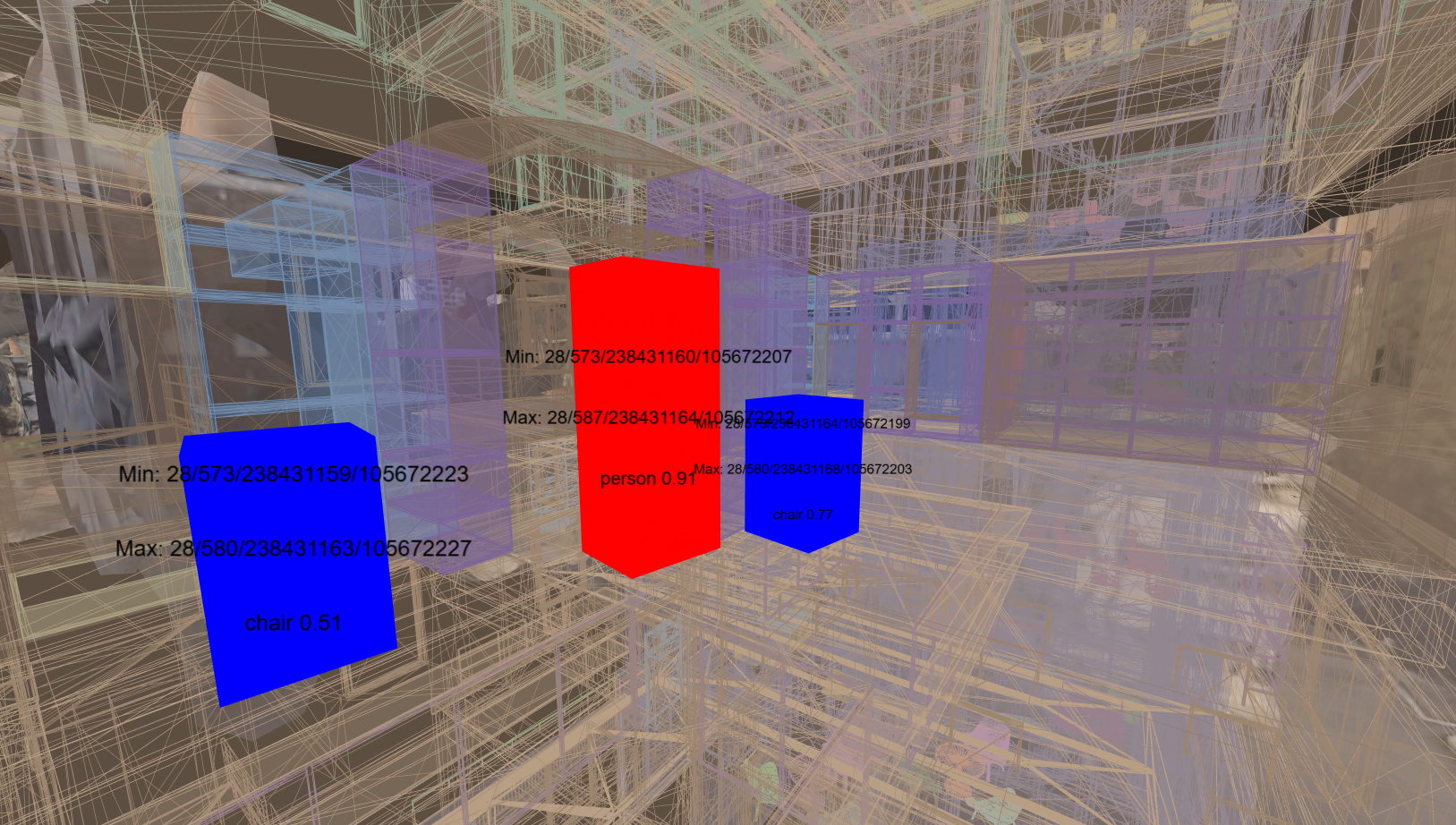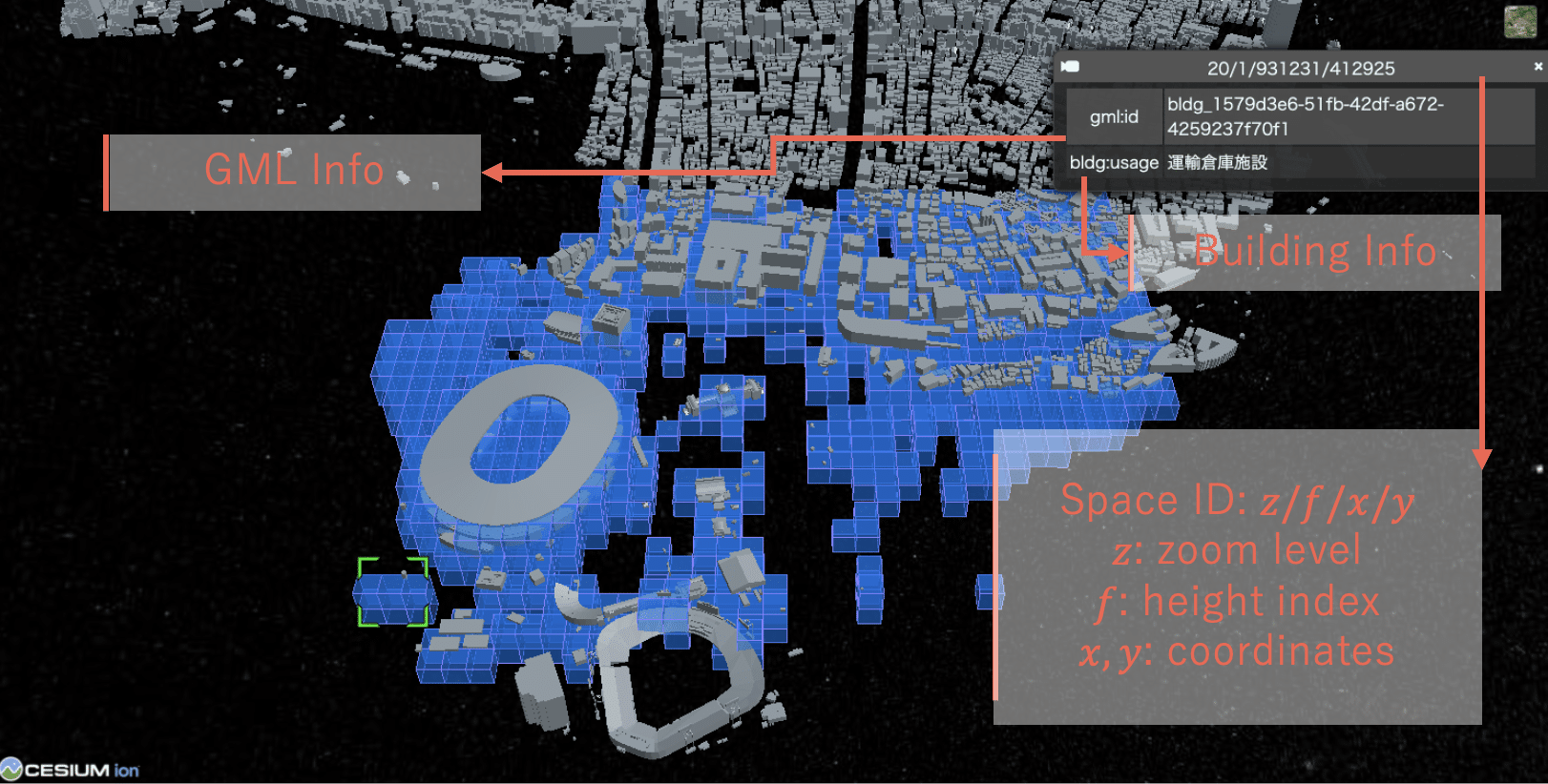
Digital twin technology is gaining attention as a foundation for reproducing and utilizing physical space in cyberspace across the entire building lifecycle—from design and construction to operation and maintenance. At Tsukada Lab, we are advancing research on BIM-based Digital Twins, combining Building Information Modeling (BIM) with dynamic sensor data, spatial audio, and semantic metadata to build an integrated information platform.
In our work on building management, we designed a web-based digital twin platform that extends traditional BIM by incorporating real-time environmental updates. While BIM offers static geometry and semantic information, it lacks adaptability for dynamic indoor environments. Our system addresses this by enabling live updates, user-friendly visualization, and flexible data interaction. User evaluations highlighted its potential for supporting building operation and facility management.
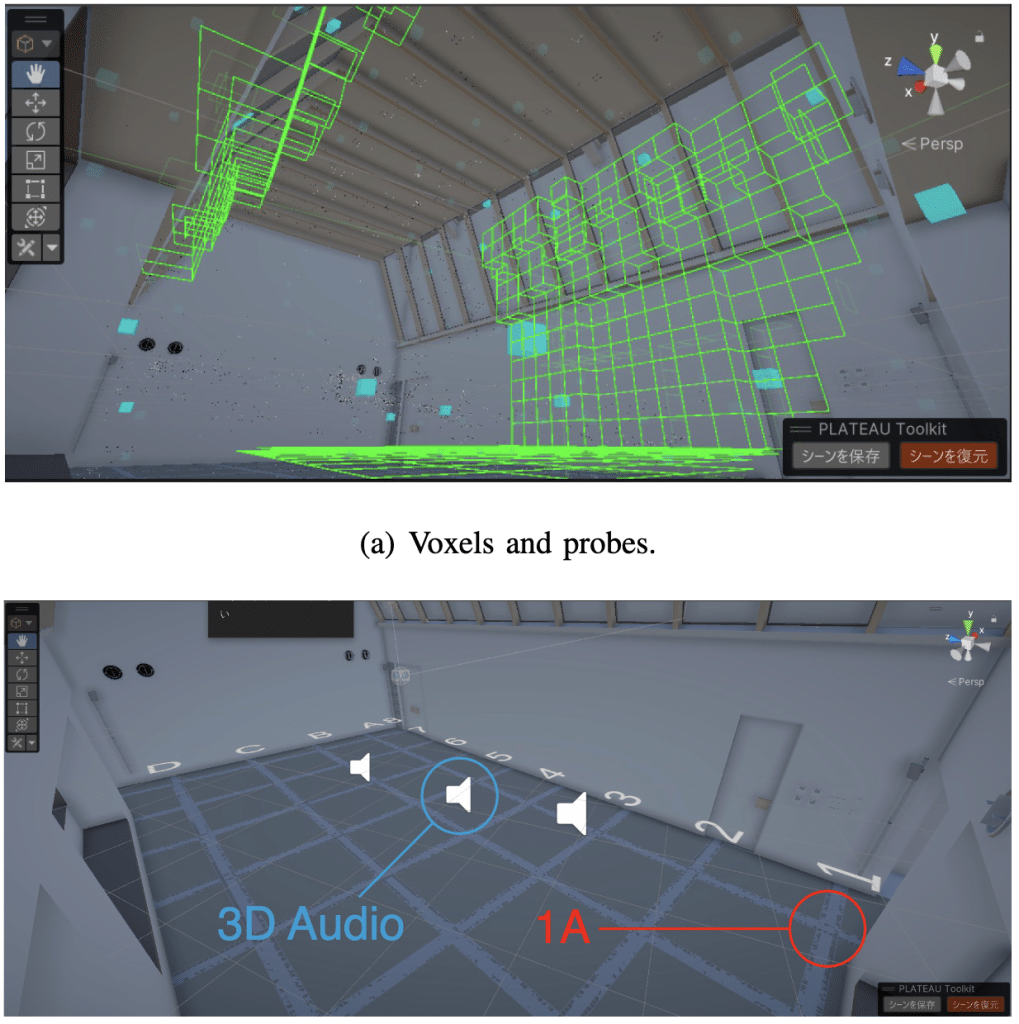
Extending BIM-based digital twins into the audio domain, we implemented a 3D audio visualization system using AR on smartphones. By leveraging Visual Positioning System (VPS) for accurate localization, the system maps spatial audio sources into the real world and visualizes them in augmented space. This approach brings a novel dimension to BIM, incorporating spatialized sound into the built environment’s digital representation.
To support interoperability and reusability across diverse and heterogeneous data assets, we proposed a semantic metadata schema and implemented a viewer interface. This Semantic Digital Twin framework allows unified description of dynamic behaviors across entities such as building components and human movement. It significantly enhances the generality and interoperability of BIM-based digital twins, paving the way for future applications in smart buildings, infrastructure management, and metaverse-linked systems.
@inproceedings{Takada2024,
title = {Design of Digital Twin Architecture for 3D Audio Visualization in AR},
author = {Tokio Takada and Jin Nakazato and Alex Orsholits and Manabu Tsukada and Hideya Ochiai and Hiroshi Esaki},
doi = {10.1109/MetaCom62920.2024.00044},
year = {2024},
date = {2024-08-12},
urldate = {2024-08-12},
booktitle = {The 2nd Annual IEEE International Conference on Metaverse Computing, Networking, and Applications (MetaCom 2024)},
address = {Hong Kong, China},
abstract = {Digital twins have recently attracted attention from academia and industry as a technology connecting physical space and cyberspace. Digital twins are compatible with Augmented Reality (AR) and Virtual Reality (VR), enabling us to understand information in cyberspace. In this study, we focus on music and design an architecture for a 3D representation of music using a digital twin. Specifically, we organize the requirements for a digital twin for music and design the architecture. We establish a method to perform 3D representation in cyberspace and map the recorded audio data in physical space. In this paper, we implemented the physical space representation using a smartphone as an AR device and employed a visual positioning system (VPS) for self-positioning. For evaluation, in addition to system errors in the 3D representation of audio data, we conducted a questionnaire evaluation with several users as a user study. From these results, we evaluated the effectiveness of the implemented system. At the same time, we also found issues we need to improve in the implemented system in future works.},
key = {CREST},
keywords = {},
pubstate = {published},
tppubtype = {inproceedings}
}
@inproceedings{Furuta2023,
title = {Web-Based BIM Platform for Building Digital Twin},
author = {Satoru Furuta and Jin Nakazato and Manabu Tsukada},
url = {https://github.com/gutp-bim/ifcdata-management-systems/tree/main/viewer
https://youtu.be/mC_CXoSo2Mk
},
doi = {10.1109/DTPI59677.2023.10365476},
year = {2023},
date = {2023-11-07},
urldate = {2023-11-07},
booktitle = {3rd Annual IEEE International Conference on Digital Twins and Parallel Intelligence (DTPI 2023)},
address = {Florida, USA},
abstract = {Building digital twin (BDT) is utilized throughout the lifecycle of a building. It serves for efficient operations during the design and construction phases, and during the operational and maintenance phases, it’s used for asset management and as field maps for robots. Building Information Modeling (BIM), which contains both semantics and geometry data of building elements, holds promise as a data source for BDT. We have extracted four key technical challenges of the digital twin, particularly vital during the operational and maintenance phases: software, visualization, update, and real-scene reconstruction. Due to the exclusive and static nature of BIM, these challenges also pose significant issues in the context of BDT. To address these challenges, we designed and implemented a Web-based BIM platform. The implemented application shows not only geometry data but also semantics data, enables easy overlay with the latest indoor conditions, and provides updating functionality. The developed system is essential for the continuous operation of BDT in dynamic indoor environments. We evaluated the application through a questionnaire survey. },
keywords = {},
pubstate = {published},
tppubtype = {inproceedings}
}
@inproceedings{Inokuchi2023b,
title = {Semantic Digital Twin for interoperability and comprehensive management of data assets},
author = {Kazuma Inokuchi and Jin Nakazato and Manabu Tsukada and Hiroshi Esaki},
url = {https://www.researchgate.net/profile/Jin-Nakazato/publication/371903091_Semantic_digital_twin_for_interoperability_and_Comprehensive_Management_of_Data_Assets/links/649b13318de7ed28ba5ca665/Semantic-digital-twin-for-interoperability-and-Comprehensive-Management-of-Data-Assets.pdf},
doi = {10.1109/MetaCom57706.2023.00049},
year = {2023},
date = {2023-06-26},
urldate = {2023-06-26},
booktitle = {IEEE International Conference on Metaverse Computing, Networking and Applications (IEEE MetaCom 2023)},
address = {Kyoto, Japan},
abstract = {Fusion of the real and virtual worlds is essential for applying digital technology to the infrastructure of human life. A digital twin is one of the technologies that aim to integrate real and virtual space. It creates a digital world with high fidelity to reality by accumulating exhaustive information from sensors to improve simulation and prediction accuracy. However, traditional digital twins have data asset management challenges owing to the physical, temporal, and structural heterogeneity of their objects. In this paper, we propose two metadata schemas that leverage semantics to construct a designer-oriented digital twin. Moreover, we implemented a viewer that reproduced the office-like demonstration field to verify the application of the proposed ontology. The proposed method enables a generic description of the dynamic behaviors of any entity by integrating physical twins faithful to the real world with virtual models expected by designers. We compared the proposed ontologies with existing techniques, conducted user evaluations, and discussed possible approaches for further enhancements for widespread use.},
keywords = {},
pubstate = {published},
tppubtype = {inproceedings}
}
autonomous driving machine learning
machine learning v2x
autonomous driving v2x
extended reality
v2x
machine learning v2x
digital twins extended reality
We are part of the University of Tokyo’s Graduate School of Information Science and Technology, Department of Creative Informatics and focuses on computer networks and cyber-physical systems
Address
4F, I-REF building, Graduate School of Information Science and Technology, The University of Tokyo, 1-1-1, Yayoi, Bunkyo-ku, Tokyo, 113-8657 Japan
Room 91B1, Bld 2 of Engineering Department, The University of Tokyo, 7-3-1 Hongo, Bunkyo-ku, Tokyo 113-8656, Japan
Mail: